How do you reduce noise in a room without asking everyone to put on headphones? Surya Maddula began working on that problem before joining Mesa School of Business. His venture, presented publicly as Whisperwave, develops active noise cancellation for open environments. The question has taken him from an early patent to prototypes, customer conversations and the harder task of building a company around the technology.
Surya came to Mesa with the project already underway. He chose a UG path that would let him keep working on it while learning how to test a market, find partners and make decisions beyond the invention itself.
An invention built around a specific problem
Headphones can reduce noise for one person. Surya wanted to explore what could happen in an office, hospital room or other shared space. The system described in his patent uses sensing and analysis to identify unwanted sound and generate counter-waves. That is the technical premise behind Whisperwave; the challenge for a venture is to prove where and for whom it works well enough to buy.
Surya secured an Indian patent while still a teenager. Whisperwave’s website describes laboratory testing and invites organizations to request pilots. Those results come from controlled conditions; the work now is to show how the system performs in shared spaces. Moving from invention to deployment involves hardware, customer validation and practical use cases together.
Keeping the venture at the centre of his education
In the student interview shared with us, Surya says he joined Mesa after confirming that Whisperwave could remain a priority. Mesa Startup Lab provided mentorship and resources while he continued to develop it. He also used the broader UG work to test other kinds of building: a Build Your Own Product project around AI-assisted job hunting and a Build Your Own Business team that sold handcrafted accessories.
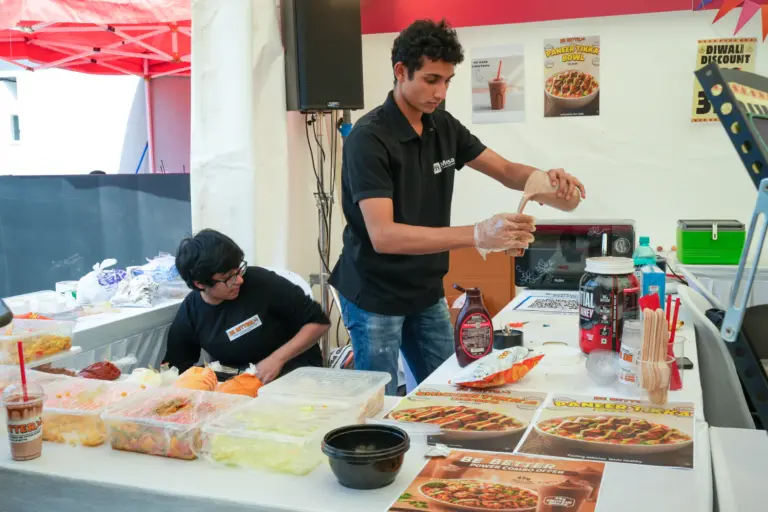
Those projects were different from open-air noise cancellation. They gave him opportunities to pitch, sell and work with teammates while he considered what his main venture would need. His account describes a BYOP pitch that led to a connection with someone who later advised Whisperwave on hiring.
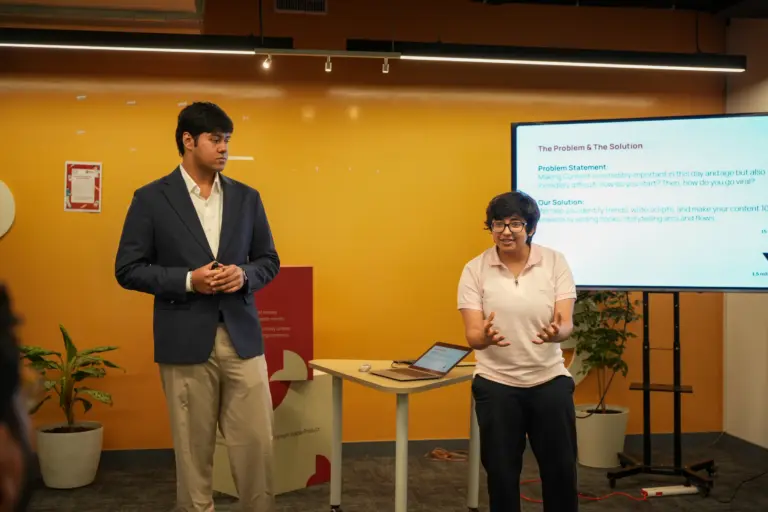
He took Whisperwave to Indira University’s Indiapreneur 15.0 national business-plan competition. His public profile records a first-place result; the organizer’s listing names ₹1 lakh as the winner’s prize. In his interview, Surya says Mesa Startup Lab covered his travel to the competition. The pitch award was separate from the venture’s grants.
From technical proof to commercial proof
Surya reports approximately $45,000 in grant funding for Whisperwave. The grants are distinct from investment, customer revenue and the ₹1 lakh pitch award. They helped support development, but external backing alone could not answer whether the venture could serve customers at scale.
Surya also took part in Entrepreneurs First. In his interview, he reported securing five to six enterprise contracts, including two paid pilots, during that experience. He was not selected for its final investment round. The question put back to him was how a larger investment would translate into a venture that could scale. That feedback shifts the story from whether the technology can work to how it can become a durable business.
What this path shows at Mesa
Surya’s invention predates his time with us. His UG experience has been about continuing the work in a setting where product decisions meet pitches, customers, operations and critique. The patent, grants and reported pilots each answer a different question; none alone settles the next one. Whisperwave remains Surya’s venture, and his path shows how a student can bring serious prior work into the program and keep testing its commercial future.