Raina Bafna came to Mesa School of Business after a knee injury changed the course of her tennis career. She had competed internationally, ranked among India’s top 15 players and earned a scholarship to study in the US. A few months into her UG experience, she was building a food business around a problem she knew from sport: finding a protein bar that worked for people avoiding lactose and whey.
In the student interview she shared with us, Raina reported more than ₹20 lakh in revenue over the venture’s first five months. She also described a separate ₹7 lakh Diwali order. Those numbers capture different stages of a business: sales already made and a large order to fulfil.
Finding a new starting point
The injury forced Raina to reconsider a path she had spent years pursuing. After a long break from formal schooling, she applied to Mesa late and entered with little familiarity with business shorthand. What she did have was an athlete’s understanding of food, training and the gap she saw in available snacks.
She began with a lactose-free, whey-free protein bar. The venture now appears publicly as Simply Grain. The product decision was specific enough to test: could she make a convenient bar for customers with a similar need, get it into their hands and persuade them to buy again?
From product to customers
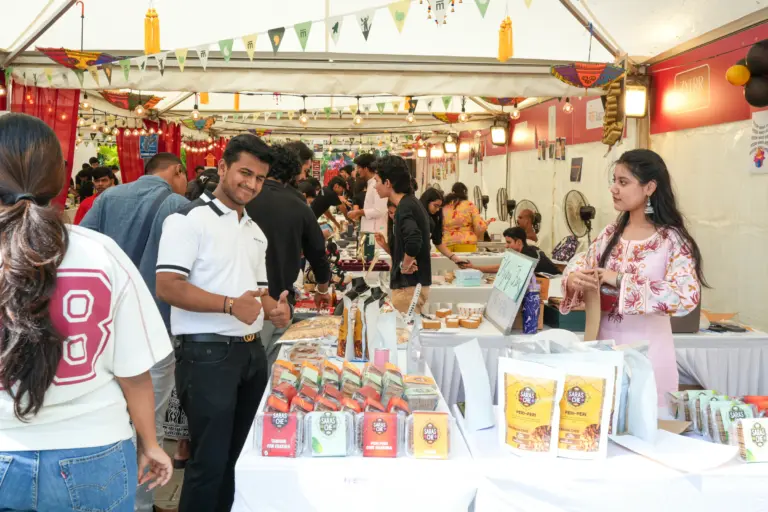
Making a bar was only the first part. Raina had to work through the offer, explain it to prospective buyers and build a route to orders. In her interview, she described the revenue milestone and the Diwali order as the venture grew. The latter was an order secured at the time of the conversation, not an additional amount we can treat as realised sales.
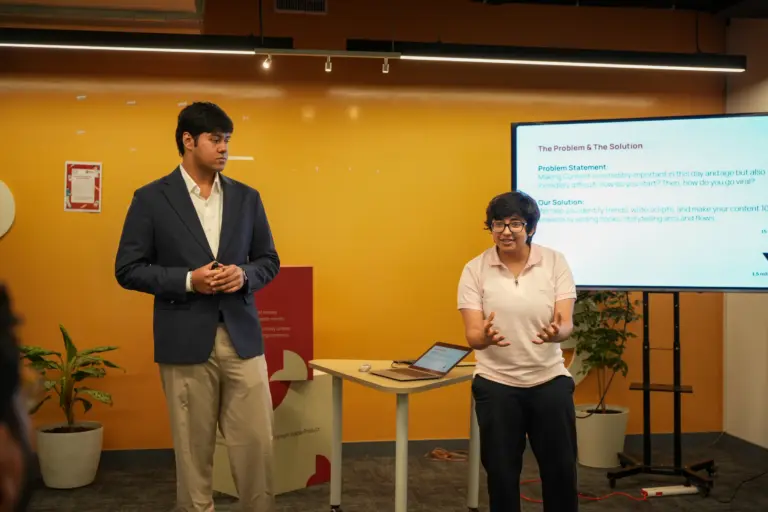
She also took the product into pitching rooms. Raina’s public account describes presenting the bar to Ghazal Alagh, who tried it and asked how she could buy more. That moment matters because the response was to the product itself. It gave the founder a conversation with a potential customer beyond a classroom presentation.
Learning to build beyond one venture
Raina’s UG work has extended into other settings. During an internship with DreamSpan, a smart-bed company, she developed a go-to-market approach for a high-priced product and sought partners who could demonstrate it to the right audience. As Mesa’s Sports Secretary, she has worked on student teams and wider participation in sport. Those experiences merit their own stories; here, they show the range of decisions she has been making while building her food venture.
At Mesa, our students are asked to take an idea into the world and learn from what customers actually do. Raina brought a problem from her life as an athlete, developed a product and then faced the work of selling and fulfilling it. Her results belong to her and her team. Our UG program gave her a setting in which to keep testing, pitching and building after an unexpected change of direction.